
Jan 10, 2026
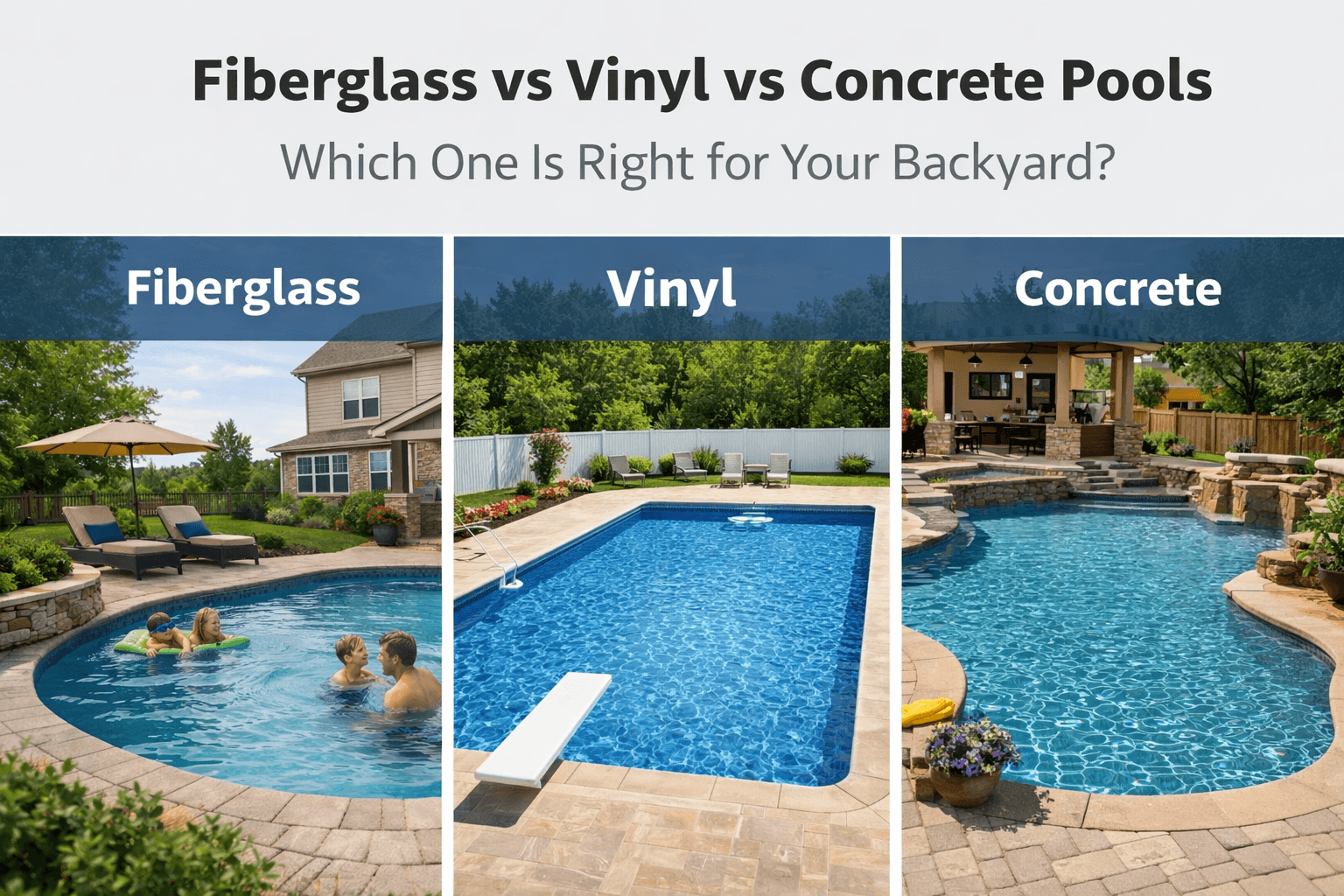
Fiberglass vs Vinyl vs Concrete Pools. Which One Is Right for Your Backyard?
Fiberglass vs Vinyl vs Concrete Pools. Which One Is Right for Your Backyard?
Choosing the right type of swimming pool is one of the biggest decisions you will make when planning your backyard. Most homeowners start with excitement and inspiration, but quickly find themselves overwhelmed by options, opinions, and conflicting information online.
Fiberglass, vinyl liner, and concrete pools all have advantages and limitations. There is no perfect pool type for everyone. The best choice depends on your budget, your property, how you plan to use the pool, and how much maintenance you are comfortable with long term.
In this article, we will walk through the key differences between fiberglass, vinyl, and concrete pools so you can decide which option fits your home and lifestyle with confidence.
A Quick Comparison of Pool Types
If you want the short version, here is a high level comparison to set the stage.
Fiberglass pools typically offer faster installation and lower maintenance with moderate upfront cost.
Vinyl liner pools often have the lowest upfront cost but require liner replacement over time.
Concrete pools provide the highest level of customization but usually come with the highest cost and longest build timeline.
The details below are where the real differences become clear.
Fiberglass Pools. Pros Cons and Best Fit
Fiberglass pools are pre manufactured shells that are delivered to your home and set into place. They have become increasingly popular due to their durability and ease of ownership.
Cost
Fiberglass pool projects in Kentucky typically range from $65,000 to $120,000 or more, depending on size, features, and site conditions.
Installation Timeline
Most fiberglass pools can be installed in weeks rather than months once permits and materials are ready.
Maintenance
Fiberglass pools have a smooth non porous surface that resists algae growth. This usually means lower chemical usage and less hands on maintenance.
Limitations
Fiberglass pools come in set shapes and sizes. Custom depths and unique designs are limited compared to concrete pools.
Best Fit For
Homeowners who want lower maintenance
Families who value faster installation
Those planning to stay in their home long term
Buyers who want predictable ownership costs
Vinyl Liner Pools. Pros Cons and Best Fit
Vinyl liner pools are built on site using a steel or polymer wall system with a custom fitted liner.
Cost
Vinyl pools often have the lowest upfront cost, typically starting lower than fiberglass or concrete options.
Installation Timeline
Vinyl pool installations usually take longer than fiberglass but shorter than concrete in most cases.
Maintenance
Vinyl liners are smooth and comfortable but require careful handling to avoid punctures or tears.
Limitations
Vinyl liners typically need to be replaced every 7 to 10 years. That ongoing cost is something many homeowners do not consider at the beginning.
Best Fit For
Homeowners focused on lower upfront investment
Buyers who want flexible shapes and sizes
Those comfortable with future liner replacement costs
Concrete Pools. Pros Cons and Best Fit
Concrete or gunite pools are built completely on site and offer the highest level of customization.
Cost
Concrete pools usually have the highest upfront cost and can vary widely based on design and finishes.
Installation Timeline
Concrete pools take the longest to build. Timelines often span several months depending on complexity and weather.
Maintenance
Concrete surfaces are porous, which can lead to higher chemical usage and periodic resurfacing over time.
Limitations
Longer construction time
Higher maintenance requirements
Higher long term ownership costs
Best Fit For
Homeowners who want full customization
Buyers seeking unique designs or deep pools
Those comfortable with higher maintenance and cost
Comparing Long Term Ownership Costs
Upfront cost is only part of the picture. Long term ownership costs can differ significantly between pool types.
Fiberglass pools typically require fewer surface repairs and less chemical use over time.
Vinyl pools require liner replacement on a regular cycle.
Concrete pools often require resurfacing and ongoing chemical management.
For homeowners planning to stay in their home long term, these costs should be part of the decision making process.
Which Pool Type Is Right for You?
There is no universal answer, but asking the right questions helps clarify the decision.
Fiberglass may be right if you want low maintenance and faster installation.
Vinyl may be right if upfront cost is your top priority.
Concrete may be right if customization matters more than time or maintenance.
Your property, budget, and expectations should guide the choice more than trends or opinions.
Final Thoughts and Next Steps
Choosing the right pool is about more than materials. It is about how you plan to use your backyard and what kind of ownership experience you want for years to come.
At Kentucky Outdoor Living, we believe the best projects begin with education and honest conversations. Whether fiberglass, vinyl, or concrete is the right fit for your home, our goal is to help you make a confident decision without pressure.
If you would like to talk through your options or get a realistic budget range for your backyard, call us at 859-518-4040 or reach out through our website. We are here to help you plan a backyard where memories are made.
Kentucky Outdoor Living - Where Memories Are Made
